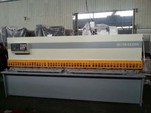
What Should be You Know For Press brakes?
One Sheet Metal bending materials using a press brake requires a detailed understanding of how your machine functions and your role in operating it. If you’re new guy to working with press brakes, there are some important things you should know before running bending machine:
How many types for Press Brake?
The most common type of press brake is hydraulic, while now different designed electronic press brakes are also available:
All kinds of Hydraulic press brakes are relatively easy to use. They can be designed for the heaviest bending jobs. They have been manufactured in sizes of 6000 tons and 16m in length, but mostly are building in the 100-500 ton range.
Ebrake press brakes are relative newcomers, but they offer many attractive features when compared with traditional Pressbrakes. Since E-brake do not have hydraulic oil required there are no oil leaks, seals, and other issues to fix. They also use less electricity than conventional hydraulic bending machines since the motors are not running continuously, servo motor only running according to bending command once bending operator depress foot pedal for actual sheet bending profiles.
Generally E-brake come in small sizes – normally under 200 tons.
PRESS BRAKE BENDING TOOLING SYSTEM
It’s important to check tooling tolerances each time you select a bending punch and die to use. It is the operator’s responsibility to ensure the press brake tooling fits the sheet bending profiles’s specifications and make adjustments when necessary.
Some of the most common press brake bending dies available to you included:
Bending V-Dies: It changes in bending angle, bending depth, and sheet bending width, but they will all create v-shaped bends. You can bend your material multiple times if that’s what your project requires.
30 degree Acute-Angle Dies: These dies can create acute, obtuse, and 90-degree angles.
Special Large Gooseneck Dies: This die is used to clear flanges
Offset Dies Tooling : These are combination punch and die sets, which produce two angles to create a “Z” shape.
Seaming Dies: These produce seams in sheets and tubes.
Rocker-Type Dies: By moving side-to-side as well as up-and-down, these dies bend the material to which they are applied.
Corrugating Dies: These dies are characterized by their wavy surfaces, which produces unique bends.
Multiple-Bend Dies: These die sets are made to form specific shapes for individual projects. They are useful for forming several bends in one motion.
DIFFERENT BENDING WAY WHEN USING A PRESS BRAKE FOR SHEET BENDING
Different bending ways included:air bending, bottom bending, and coining:
Air Bending method, sheet metal bending profiles will only come into contact with the edge of the die and the tip of the punch, the punch being forced past the top of the die into the v opening without touching the bottom of the v. Since the punch tip does not penetrate the workpiece, the inside radius of the bend will be controlled almost entirely by the size of the v opening of the bottom die. The benefit of this is that the operator can compensate for mistakes or tweak the design by simply switching bottom dies. If the dies are not selected carefully and according to an air bend force chart, however, it becomes easy to produce bad parts.
A note of caution: if you’re working with an older, mechanical model, you should almost never air bend. More dated machines usually have greater margins or error, and even a few thousands of an inch difference can result in poor parts.
Coining: This basic type of bending involves forming a workpiece between a punch and die. By exerting the right amount of pressure, the punch tip will penetrate and start to flow into the material. The results are accurate, highly repeatable, and can be achieved with simpler machines than those needed for air bending, normally it’s required determined shape top punch and bottom dies which designed according to actual bending profiles.
Like press brake air bending, the results of bottom bending can be highly repeatable if properly set up. This method does, however, require heightened understandings of bending tooling, tonnage, materials, and timing of steps, giving more experienced operators a definite advantage.
PRESS BRAKE SHEET METAL BENDING TONNAGE
As the Press brake operator, you’ll need to understand concentrated loading limits, as exceeding them can damage pressbrakes,or bending tooling system, sometimes it will be damaged bending parts; You should be familiarize yourself with concepts including bending tonnage, tooling load limits, sinking tonnage limits, and centreline load limits, and know how to calculate them.
Tonnage estimates are available from press brake manufacturers, and they are sometimes mounted on the machine. Remember that charts are for air bending only. If you are bottom bending you can exceed the estimate by four times. You can exceed it by eight times for coining. You can’t exceed it when air bending without risking damage to the machine, your tooling, and the material.
How To Maintaining Your Press Brake Bending Machine
Even if maintenance isn’t your responsibility, the press brake operator should be remain up-to-date with the machine’s requirements and perform daily and weekly inspections. Always inspect punches and dies before use to ensure they’re free of dents or cracking. Corrupted pieces can produce poor work or damage the machine.
If you are working with a hydraulic model, the oil and filter will need to be periodically changed. A 2000-hour (or as per manufacturer instructions) maintenance check should be performed to check the oil, filters, and valves.
It is important to lubricate elements weekly, ensuring you use a lubricant consistent with the manufacturer’s specifications.
Pay attention to:
Ball screws
Gear segment
Guide encoder and encoder guiding system
Guides and rails
Rack and pinion system
Ram guiding system
It is necessary to inspect mechanical components at least twice a year and the electrical system at least once to ensure the machine’s optimal performance.
HOW TO OPTIMIZING PRESS BRAKE PRODUCTION RUNS
As one Press brake operator, your ultimate goal is to produce quality pieces while keeping setup times to a minimum, ensuring maximum efficiency.
Be conscious of the correlation between setup time and the number of parts being produced. Simple parts that require little setup can be made in small quantities, while complicated parts requiring more time beforehand should be made in larger bending shifts. Be familiar with reading drawings. They will include information on the dimensions of parts, bend angles, inside radius, and blank sizes, and should be based on the capabilities of the press brakes and tooling.
Are You Looking For One Hydraulic Press Brake From China Manufactures?
AHYW China Yawei factory can design all kinds of sheet metal Shears and Press brakes, 3m sheet metal cutting and bending machine, 4m sheet bending, 6m steel plate shears and press brakes are all available, email us for more details.