


How To Servicing Your CNC Press Brake Bending Machine
tighting Your CNC Press Brake Bending Machine
Proper cnc press brake installation and calibration is critical. If it isn't installed or calibrated correctly it will never work right. You might make your first part right, but you will fight to get it right every time after.
CNC Press brake will be always running with parts moving and fixing, some times the anchor and level, your anchor bolts will start to work loose over time. Loose anchors are one of the things that can really throw your bends off, so they are something that you need to keep an eye on when you are running a precision machine like a press brake. Make sure your machine stays level, stays anchored and isn't moving while it is operating.
As a part of the general maintenance of your press brake, you should inspect your machine as you are cleaning it to see if other parts are working loose. Also listen for unusual noises as you operate your press brake Check and tighten all necessary bolts and connections at least monthly.
Regarding cnc metal bending machine, we don't recommend off-center bending. While it can be done, we suggest following the very common practice of bending in the center of your brake. Everything will be kept equalized and you won't have to fight it and make adjustments while putting undue strain on the machine. If you are bending a small piece, bend in the center. No matter what it is, it is better to bend in the center.
A basic press brake practice when you are done running your machine is to park it in the bottom position. Rest the beam down in the die or on blocks every night. It is much easier on the pres brake bending cylinders and valves when the hydraulics aren't having to hold the ram up. No matter how tight a hydraulic system is, even if the brake is brand new, pressure can bleed off holding so much weight.
Clean Your CNC Press Brake Bending Machine
One of the most important elements to focus on in CNC bending machine maintenance is cleanliness. Dust and dirt are the enemies of your whole machine, especially your tooling. It is essential to keep your press brake wiped down and clean. Your machine should also have rust protectant applied to possible rusting surfaces.
CNC PRESS BRAKE back gauge needs to be kept clean to work accurately. Lubricate your rails and ball screws according to your manufacturer's recommended schedule, but be sure to wipe off all excess lubrication so it isn't collecting debris and other contaminants.
CNC bending amchine's electrical cabinets will usually have cooling fans or vent filters which can become blocked by dust, so they should be removed and cleaned or blown out at least monthly and as needed. Always keep the door to the electrical cabinet closed except when you are accessing it, both for safety and for cleanliness. Hydraulic motorized pump should also be kept clean of dust and dirt.
CNC Bending machine's safety lasers must be kept clean in order to operate correctly. Any dirt on the lens can diffuse the laser, causing the light beam to spread out instead of being focused straight across. Scratches on the lens can also diffuse the laser, so be sure to use a clean, non-abrasive cloth to wipe off the dirt. It wouldn't be a bad idea to have a specific cloth set aside that you clean the laser with every morning at start up to prevent any build-up on the lenses.
Ensure CNC Press brake Tooling System Cleaning
You are bending one material on one set of press brake tools, the material will be forced to customized shapes, particularly when you are working with mild steel sheet. Regardless of what material you are bending, dust and debris will come off of the metal and will work its way down under your dies. Even if you are bending aluminum, there are fine particles along the cut edge that will break off. Any material coatings, rust-proofing chemicals, and built-up resin will also flake off during bending.
These all items are continually building up in and around your press brake tooling, getting compressed and stuck to it. If you aren't changing your bending pressing tooling often - or even if you are, but don't clean it in between uses - you can significantly affect the accuracy of your press brake. For example, if enough dust collects to change your press brake tooling height by two thousandths of an inch, you might throw off the accuracy of your bends by as much as two degrees.
Wiping oil - which can collect dust - and mill scale off of your tooling as you are changing it can make a huge difference in the long run. Besides cleaning the working surfaces of the tooling, you should also clean underneath your bottom die and wipe off the top part of your upper punch (where it seats to the machine). It is also a good idea to keep your tooling clean to sight on the exposed surfaces as you are using it.
Mounting Your CNC Press brake tooling properly
Another items that can affect your press brake tooling is correct mounting. As you load and unload your tooling, make sure it is seating correctly. The upper tool should be seated under a little bit of tonnage to make sure it's up where it's supposed to be. You also need to periodically check and verify that your tooling is aligned correctly. Whenever you start running into problems with your press brake, one of the first things to check is to make sure your tooling is aligned.
Checking Diagnosis Mode of CNC Press brake controller
When you found your CNC press brake control and run into problems that you can't figure it out, try restarting your machine. Just like a computer that locks up and has to be shut down to clear out a problem, "rebooting" your press brake is sometimes necessary. Shut the machine's power completely off (the whole press brake and not just the control), let it stay off for 30 seconds to drain power from all circuits, then restart your brake. It's not the most common issue, but it is the easiest fix for a machine, so before you call a repair technician that's one of the first things to check.
A basic trouble-shooting technique for a CNC 5 ais press brake having problems running a new metal bending program is to try the machine with an old bending program. We've known operators who decide that there must be a problem with a brake when all of a sudden something isn't working right with a new program, yet the day before it was running just fine with a different sheet bending program.
Some times many press brake operators who think they are having problems with their screen and recalibrate it when it's simply dirty and cleaning it would have solved the problem. People have natural oil in their fingers and get dirty hands while loading a press brake and all of that can leave a film on their control. You can avoid problems by regularly cleaning your touch screen with a soft cloth like a microfiber cloth.
You need to learn how to use diagnosis mode, now all almost CNC Press brake controller have this monitoring function, cnc press brake operator need to learn how to use diagnosis mode to check the reaon of downing time, why bending machine can not working prpperly? Why Y1&Y2 axis can not moving in correct mode?
Proceed Regular CNC Press brake bending machinery Maintenance
Making regular lubrication of your cnc sheet metal bending machine, and you should clean as you lubricate. As you grease something the excess grease will start to come out on the surface, and wiping it off right away will prevent it from picking up dust and potentially causing problems.
CNC bending sheet press brake's manual should have a diagram that shows required lubrication for specified parts along with a chart showing the estimated schedule to follow.
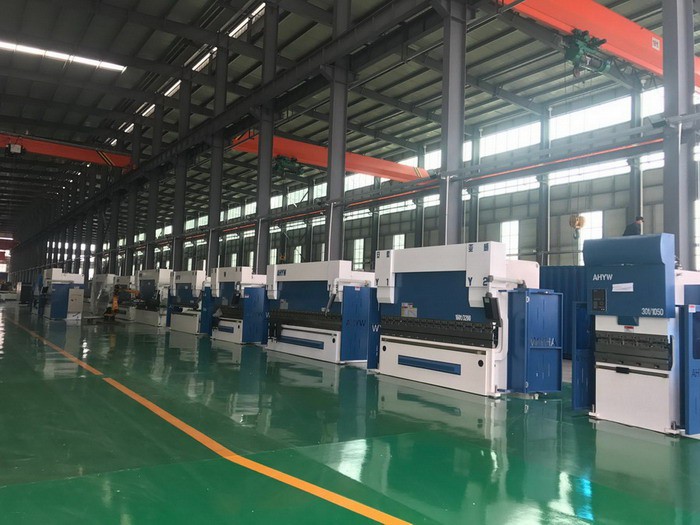
Are you looking for 3m,4m&6m CNC Press brakes from China supplier for bending 4m&6mm sheet metal products? In China AHYW Yawei factory, 130T4M, 160T4M, 200T4M, 300T4M, 400T4M, 500T4M CNC Sheet metal Bending machine160T6M, 200T6M, 250T6M, 300T6M, 400T6M, 500T6M, 600T6M, 800T6M, 1000T6M, 2000T6M large cnc press brake are all available, email us for customzied 4m&6m metal profiles bening solution.


